


















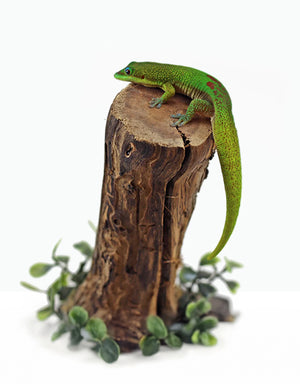
Choosing the right reptile enclosure


Thinking about upgrading your reptile's enclosure before the year wraps up? The thinking makes sense on paper. More room means more freedom, so the biggest enclosure you can fit must be the best one. Not always.
Size matters, and a cramped enclosure can be a real problem. But floor space alone doesn't make a good home. What matters is how much of that space your reptile can comfortably use and whether the environment meets its specific needs.
Empty space is not usable space
Many reptiles are naturally cautious animals. Out in the open, with nowhere to hide, they can feel exposed and stressed. A large, bare enclosure may leave a shy animal spending most of its time tucked away in one corner.
A well furnished setup makes all the difference. Hides, plants, branches, rocks and other visual barriers give your reptile places to explore, climb, rest and feel secure. The goal is to make the entire enclosure functional, not just spacious.
Heat has to reach
Every enclosure needs an appropriate temperature gradient, allowing your reptile to move between warmer and cooler areas to regulate its body temperature.
Larger enclosures are much more challenging to heat properly. A common mistake that we see over and over again is using the exact same light source when upgrading from a 40gal habitat to a 60-90gal habitat. The same light that gave you the correct heat in your 40gal is no longer going to be enough for your larger enclosure. A single small heat source may create one warm spot while leaving the rest of the enclosure too cold and this is detrimental to the health and activity of your reptile. Heating and lighting equipment should be selected based on your reptile's species, enclosure size and environmental requirements. Generally speaking, anything over 40gal, be prepared to use multiple heat and light sources.
Always measure temperatures at different locations to make sure the warm and cool zones are appropriate.
UVB lighting is another important consideration for species that require it. Make sure the lighting provides the appropriate exposure while also allowing shaded areas where your reptile can retreat. Once you upgrade to a habitat that has a higher ceiling, you will need to very carefully consider how to get your UVB to reach further down than before, this means finding stronger and higher quality lights, possibly several of them.
Babies and big enclosures
Young reptiles need an environment where they can comfortably access food, water, hiding spaces and appropriate temperatures.
In some cases, particularly with young lizards and geckos, a very large, sparsely furnished enclosure can make feeding more challenging. Feeder insects may also find plenty of places to hide, making them harder for your reptile to locate. We also find that it is much more difficult to provide the correct lighting for a young delicate reptile in a large enclosure.
Rather than automatically choosing a smaller enclosure, focus on providing enough furnishings, appropriately sized hides, accessible feeding areas, and strong enough heat and UVB. The enclosure should accommodate your reptile's current needs while allowing room for growth.
So, what is the right size?
The right enclosure should accommodate your reptile's adult size, natural behaviours and species specific requirements. Just as importantly, every part of the setup should serve a purpose.
Keep these essentials in mind:
· Secure hides: Provide hiding spots on both the warm and cool sides so your reptile can feel secure while regulating its temperature.
· Climbing and hiding opportunities: Add branches, plants, rocks and other furnishings suited to your reptile's natural behaviour.
· Proper heating: Create and monitor an appropriate temperature gradient throughout the enclosure including the vertical space.
· Appropriate UVB: Provide species-appropriate UVB exposure, along with shaded areas and places to retreat. Research and understand how UVB woks because it is not visible to the naked eye.
· Room to move: Make sure your reptile has enough usable space to stretch, explore and behave naturally.
Bigger can absolutely be better. It just has to be done right.
Planning an enclosure upgrade and not sure what size or setup is right for your reptile? Come talk to us in store, or explore our selection of PVC and glass enclosures to find the right fit.


