

















Milksnake Care Sheet


Introduction
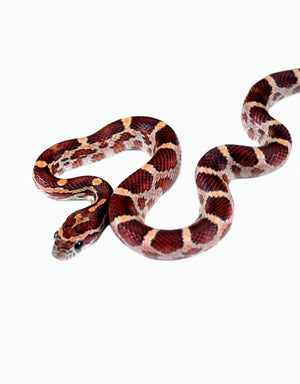
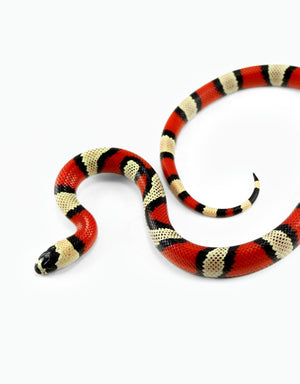
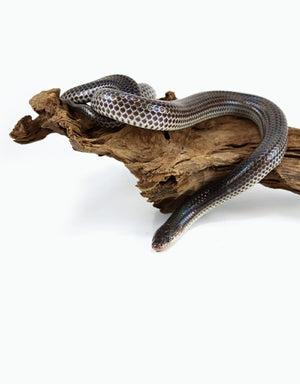
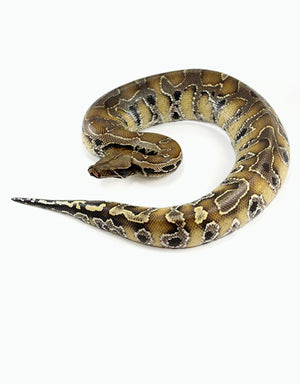
Milksnakes (Lampropeltis triangulum) are a captivating and beginner-friendly choice for snake enthusiasts, known for their vibrant red, black, and white or yellow banding that mimics the appearance of venomous coral snakes. These non venomous snakes are found across North, Central, and South America and are highly adaptable to different environments. They are a manageable size for most keepers, making them easy to house and care for. Their striking appearance, docile temperament, and hardiness contribute to their popularity among reptile hobbyists.
Care sheets are only to be taken as guidelines. Just as with all animals, each reptile will have unique traits and personalities special to the individual animal that may require adaptation in their husbandry and care. The following care sheet will address basic requirements but as the primary caretaker of your pet, we encourage you to take notice of your pet's behaviours and preferences and make adjustments as they grow with you and your family. Please also keep in mind that unlike mammals, most reptiles change their behaviour according to seasonal weather changes even if you keep them indoors all year round. Most reptiles also change their behaviour according to their life stages and should not be expected to behave the same their whole life.
We keep milksnakes in stock at our Toronto store and ship across Canada.

Cheat Sheet
Milksnake
| Common name | Milksnake |
|---|---|
| Scientific name | Lampropeltis triangulum |
| Natural location | Southern Canada, United States, Mexico |
| Habitat (wild) | Warm and temperate, high tolerance to seasonal variation |
| Captive enclosure | 10-20gal for hatchlings/juveniles, 40-90gal+ for adults |
| Substrate | Aspen, Cypress Mulch, Loose Bark |
| Temperature tolerance | Nighttime: 68-75°F (20-24°C), Cooler: 72-78°F (22-26°C) |
| Basking temperature | 82-88°F (28-31°C) |
| UVB lighting | Optional. Not required but can be beneficial in small amounts. |
| Humidity | Approx. 40%-60% |
| Average adult size | 3-5 feet |
| Captive lifespan | 20-30 years |
| Fun fact | Mimicry of venomous coral snakes |
Housing
Enclosure: Provide a secure enclosure with enough space for your Milksnake to stretch out comfortably. A 10-15 gallon tank is suitable for juveniles, while adults will require a larger enclosure, such as a 20-40 gallon tank or larger. Keep in mind that the larger the enclosure, the more you will have to heat and furnish it to provide adequate husbandry.
Substrate: Choose a substrate that encourages burrowing and retains moisture without being overly damp, such as cypress mulch, coconut husk, or reptile bark bedding. You can also use aspen shavings if you are able to provide adequate air humidity. Avoid substrates that may cause infections in the eyes, mouth, and vents such as coco fibre or sand.
Heating: Maintain a thermal gradient within the enclosure, with a warm side temperature of 85-90°F (30-32°C) and a cool side temperature of 70-75°F (21-24°C). Night time temps can drop to 65°F (18°C) but should not ever get lower. We recommend heat pads and radiant heat over heat lamps due the high likelihood of heat lamps drying out the enclosure, causing humidity very difficult to maintain. If you prefer to use heat lights, use dark heat lamps or infrared heat lamps only and ensure that you can maintain humidity.
Hide spots: One hide spot is often enough but the more the merrier. If only offering one, ensure that it is situated on the warm side. If you have the space, at least two is ideal, one on the warm side and one on the cool side of the enclosure, to allow your Milksnake to thermo-regulate and feel secure. Half logs, cork bark, and commercially available hides are suitable options. You may also want to turn your cool side hide into a humid cave.
Humidity: Milksnakes prefer consistent moderate humidity levels of 40-60%. Ensure proper ventilation in the enclosure to prevent excessive moisture. A humidity box filled with damp sphagnum moss can be added, especially during shedding, to help maintain proper hydration.
Diet
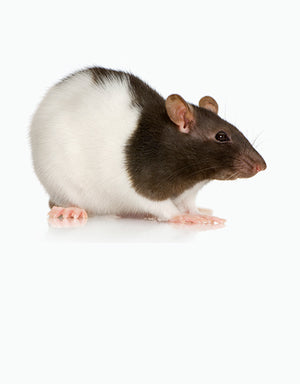
Feeding: Milksnakes are carnivores and have the same diet requirement as Kingsnakes, except they are much less likely to eat other snakes. In the wild, they have a large variety of interests in their diets that include rodents, small birds, frogs, and small lizards. As it can be very difficult to source this variety as food, they do very well in captivity on mice and rats. Hatchlings should be fed pinky mice every 5-7 days, while adults can be fed larger mice or small rats every 7-14 days. Prey items should be no wider than the thickest part of the snake's body.
Milksnakes have a fast metabolism and over time you will notice that they become very restless when they are hungry. As they age, their feeding frequency typically decreases, with very mature Milksnakes over 15 years old often eating only once every 2-3 weeks, provided the meal is appropriately sized.
There is strong debate over feeding live versus frozen thawed and there are pros and cons to both. Nutritionally, one is not better than the other assuming you have acquired your feed from a healthy source. Never leave a live rodent unsupervised with your snake and never leave an uneaten frozen or thawed rodent to decompose overnight. To read more about feeding live versus frozen and thawed, see Karen's Corner.
Water: Provide a water dish filled with fresh, clean water at all times. Ensure the water dish is large enough for your milksnake to soak in if desired.

Health & Maintenance
Hygiene: Your Milksnake will only relieve itself once every 5-10 days on average. Over time, you will learn your snake's bathroom routines. Look out for it regularly and remove all excrements as soon as you see it to prevent the buildup of bacteria and parasites. Remove excrements, shed skin, and uneaten prey items promptly. We recommend a full substrate change once per season, 4 times a year. Wood and plant decor can be washed monthly with hot water and dish soap and put back into place.
Handling: Milksnakes can have quick spurts of movement and can be intimidating to handle at first. Always remain calm and confident when handling and they will calm down over time and eventually be easily handled. Always support its body to prevent discomfort. Avoid handling during the shedding process and after feeding to minimize stress. Wash your hands before and after handling to prevent the spread of bacteria. Regular handling helps them become more accustomed to human interaction.
Behavioural observation: Milksnakes are curious and active, often exploring their enclosure during dusk and dawn. They may hide during the day, as they are crepuscular by nature. With proper care, they become calm, predictable, and long-lived pets, often thriving for 20 years or more in captivity.
Monitor your Milksnake's behaviour for signs of illness or stress, such as decreased appetite, lethargy, or abnormal shedding. A healthy and well fed Milksnake will always have strong muscle tissue and holds itself up well at all times.
Quarantine: Quarantine any new additions to your reptile collection to prevent the spread of diseases.
Common Questions
Are milksnakes venomous?
No. Their red, black and white or yellow banding mimics the venomous coral snake, which is a defence that works on predators. Milksnakes themselves are completely non venomous.
Are milksnakes good for beginners?
Yes. They are docile, hardy and manageable at 3 to 5 feet. The one thing to expect is quick bursts of movement, which can be intimidating at first. Stay calm and confident and they settle with regular handling.
How often do milksnakes eat?
Hatchlings take pinky mice every 5 to 7 days. Adults take larger mice or small rats every 7 to 14 days. They have a fast metabolism and get visibly restless when hungry.
What is the difference between a milksnake and a kingsnake?
Milksnakes are a kingsnake species, so care is nearly identical. The practical difference is diet. Kingsnakes will eat other snakes, milksnakes are much less likely to.
What humidity do milksnakes need?
A consistent 40 to 60%. Good ventilation matters as much as the number, to stop moisture building up. A humid box with damp sphagnum moss helps during shedding.
How long do milksnakes live?
20 to 30 years in captivity.
All Reptiles, all the time.
Milksnakes in stock now
We carry milksnakes, along with the substrate, enclosures, heating and hides covered in this guide, at 1911 Kennedy Rd. Unit 99 in Toronto. Staff can walk you through a full setup in person.


