

















Jackson's Chameleon Care Sheet


Introduction
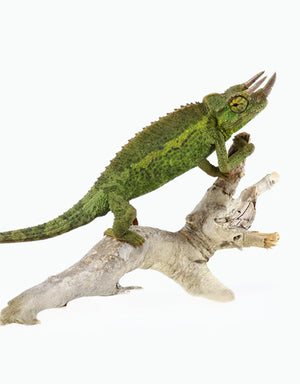
Jackson's Chameleons (Trioceros jacksonii), also known as three-horned chameleons, are medium-sized, arboreal lizards known for their distinct appearance and relatively docile nature. Males are easily recognized by their three forward-facing horns, while females lack or have reduced horn development. These chameleons are less vibrantly coloured than other chameleons but display beautiful shades of green, with hints of blue and yellow. They are relatively hardy compared to other chameleons but still require precise care to remain healthy.
Care sheets are only to be taken as guidelines. Just as with all animals, each reptile will have unique traits and personalities special to the individual animal that may require adaptation in their husbandry and care. The following care sheet will address basic requirements but as the primary caretaker of your pet, we encourage you to take notice of your pet's behaviours and preferences and make adjustments as they grow with you and your family. Please also keep in mind that unlike mammals, most reptiles change their behaviour according to the weather seasons even if you keep them indoors all year round.
We keep chameleons in stock at our Toronto store and ship across Canada.

Cheat Sheet
Jackson's Chameleon
| Common name | Jackson's Chameleon |
|---|---|
| Scientific name | Trioceros jacksonii |
| Natural location | Kenya, Tanzania |
| Habitat (wild) | Montane Forest |
| Captive enclosure | 12x12x18” to 18x18x24” hatchlings/juveniles, 18x18x36” to 24x24x48”+ adults |
| Substrate | Bare, Tile, Reptile Carpet, Mulch, Husks, Soil Blends |
| Temperature tolerance | Cooler: 65-75°F (18-24°C), Nighttime: 55-65°F (13-18°C) |
| Basking temperature | 80-85°F (27-29°C) |
| UVB lighting | Essential. Approximately 12 hours a day |
| Humidity | 50-80% |
| Average adult size | 18-15 inches |
| Captive lifespan | 5-10 years |
| Fun fact | Benefit from relatively steep temperature drops at night time |
Housing
Enclosure: A spacious, well ventilated enclosure is crucial for Jackson's Chameleons. Screen cages are preferred over glass or plastic enclosures, as they provide excellent airflow and additional climbing surfaces. However, it is very important to note that screen enclosures can be very difficult to maintain humidity and for this reason, sometimes it is better to choose a glass enclosure instead. A screen enclosure where you are not able to maintain humidity can be detrimental to your chameleon. A minimum enclosure size for an adult is 18x18x36”, though larger is always better. It is not advisable to place hatchlings into the full size enclosure unless you are highly experienced. Juveniles are very delicate and more sensitive to their environment, and we recommend a smaller environment when they are young so that you have more control over the climate. Vertical space and lots of climbing branches and foliage are essential, as these lizards spend most of their time climbing.
Substrate: Fine substrates such as coco fibre are generally discouraged, as Jackson's Chameleons are prone to accidental ingestion especially when they are young. Instead, a bare floor with paper towels, reptile carpet, or a bioactive setup with a drainage layer and live plants is ideal. If a bioactive enclosure is used, a safe soil mixture without perlite or fertilizers should be chosen. Once they are bigger, the use of mulch or bark mixtures is also acceptable.
Temperature: Jackson's Chameleons prefer cooler temperatures compared to other chameleon species. The basking spot should be maintained at 80-85°F (27-29°C), while the ambient temperature should remain between 65-75°F (18-24°C). At night, temperatures can safely drop to 50-60°F (10-16°C), which they tolerate well. Unlike many other reptiles, Jackson's Chameleons benefit from these nighttime temperature drops, as it mimics their natural high-altitude environment. Heat should be supplied through an overhead basking bulb placed outside the enclosure to prevent burns.
Humidity: These chameleons come from mountainous ranges where temperatures drop but humidity remains high. Humidity levels should be kept around 50-80%. Using a reptile fogger or misting system is highly beneficial for this species. Chameleons will easily succumb to dehydration if proper humidity is not maintained.
Lighting: Provide UVB lighting for 10-12 hours a day to support proper calcium and vitamin D3 metabolism and overall health. Use a full-spectrum UVB bulb specifically designed for reptiles. UVB lighting can be provided in the form of linear fluorescent, compact fluorescent, mercury vapour, and more recent technology provides UVB lighting in LED form as well. Heating bulbs can be provided by basking heat bulbs, heat emitters, or deep heat projectors. The amount of lighting you need will depend on the size of your setup and temperature of the room the enclosure stays in.
Decor: It is crucial that lots of climbing opportunities are provided for Jackson's Chameleons. They eat, sleep, and roam high up in the trees and it is such a pleasure to watch them navigate branches of all sizes. A healthy chameleon will never be found on the ground unless it is a female preparing to lay eggs. Climbing and hiding spots are achieved by placing branches at different levels, live plants with sturdy branches, vines, and foliage canopies, both artificial and live.
Diet
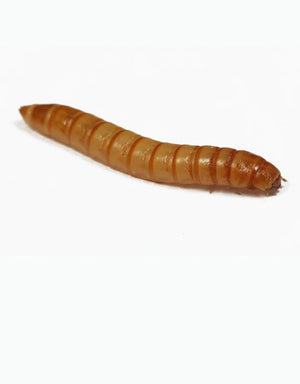
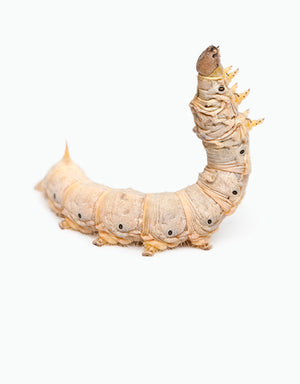
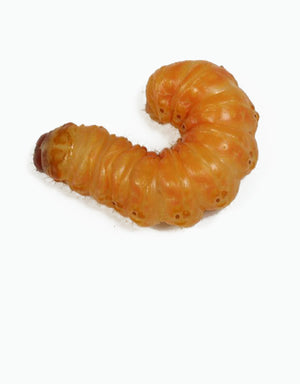
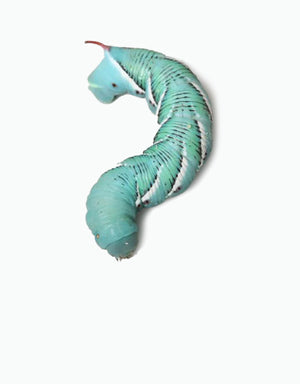
Feeding: Jackson's Chameleons are insectivores, requiring a varied diet of gut loaded feeders such as crickets, dubia roaches, silkworms, and hornworms. Occasional treats like butterworms, waxworms, or black soldier fly larvae can add nutritional variety.
Gut loading: Gut-load insects with nutritious foods before feeding them to your chameleon to ensure optimal nutritional value.
Supplementation: Lightly dust insects with calcium powder. You can use a multivitamin if you wish but in our experience, Vitamin A supplement is more beneficial for this species. Be careful not to over supplement with vitamin D3.
Water: Unlike many other reptiles, chameleons do not drink from standing water, so misting or an automatic drip system is necessary to provide drinking water. A well hydrated chameleon will be very alert and exhibit bright eyes, while dehydration may cause sunken eyes and lethargy.

Health & Maintenance
Hygiene: Spot clean your enclosure on a daily basis to prevent bacteria build up and general cleanliness. We recommend a full substrate change once per season, 4 times a year. A bioactive terrarium will decrease the need for deep cleaning and if you are using mostly artificial then the wood and plant decor can be washed monthly with hot water and put back into place.
Handling: Handling should be kept to a minimum, as Jackson's Chameleons are naturally solitary and stress easily. While they may tolerate brief handling better than other chameleon species, they still prefer to be observed rather than held. If handling is necessary, allowing the chameleon to climb onto a hand or branch voluntarily is the best approach. Forceful handling can cause stress and defensive behaviour.
Behavioural observation: Jackson's Chameleons are relatively calm compared to other chameleon species, but they are still highly territorial and should not be housed together. Males are especially aggressive toward one another and may display defensive postures or darkened colours when feeling threatened. They use colour changes and body language to communicate mood, stress levels, and temperature regulation. A relaxed Jackson's Chameleon typically displays bright green hues, while darker colours may indicate stress, illness, or a need to absorb more heat.
Quarantine: Quarantine any new additions to your reptile collection to prevent the spread of diseases.
Common Questions
Do female Jackson's chameleons have horns?
Usually not, or only reduced ones. The three forward-facing horns are how you spot a male at a glance.
Why do Jackson's chameleons need cold nights?
They come from high-altitude montane forest where the temperature falls sharply after dark. That drop is not something they merely tolerate, it is something they benefit from. A room that stays warm around the clock is a common cause of trouble with this species.
What size enclosure does a Jackson's chameleon need?
18x18x36 inches minimum for an adult, larger if you can. Juveniles do better in 12x12x18 to 18x18x24 because a smaller space is easier to hold at stable conditions. Height matters more than floor area.
Screen cage or glass?
Screen is preferred for airflow and climbing surface. The catch is humidity, which needs to sit at 50 to 80%. If you cannot hold that in a screen cage, glass is the better choice. A screen enclosure you cannot keep humid does more harm than good.
Can Jackson's chameleons live together?
No. They are calm by chameleon standards but still highly territorial, and males are particularly aggressive toward each other. One per enclosure.
Do Jackson's chameleons drink from a bowl?
No. Misting or an automatic drip system is how they take water. An alert animal with bright eyes is hydrated. Sunken eyes and lethargy mean it is not.
All Reptiles, all the time.
Chameleons in stock now
We carry the screen and glass enclosures, misting systems, UVB lighting and branches covered in this guide at 1911 Kennedy Rd. Unit 99 in Toronto. Staff can walk you through a full setup in person.


