
















Colombian Boa Care Sheet


Introduction
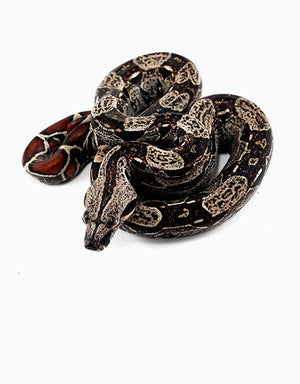
The Common Colombian Boa (Boa imperator) is a robust and widely kept species of boa constrictor native to Central and South America. They are known for their manageable size, generally docile temperament, and adaptability to captive conditions. These snakes make excellent pets for reptile keepers who can handle their size and are willing to spend lots of time providing enrichment.
Care sheets are only to be taken as guidelines. Just as with all animals, each reptile will have unique traits and personalities special to the individual animal that may require adaptation in their husbandry and care. The following care sheet will address basic requirements but as the primary caretaker of your pet, we encourage you to take notice of your pet's behaviours and preferences and make adjustments as they grow with you and your family. Please also keep in mind that unlike mammals, most reptiles change their behaviour according to seasonal weather changes even if you keep them indoors all year round. Most reptiles also change their behaviour according to their life stages and should not be expected to behave the same their whole life.
We keep Colombian boas in stock at our Toronto store and ship across Canada.

Cheat Sheet
Colombian Boa
| Common name | Colombian Boa |
|---|---|
| Scientific name | Boa imperator |
| Natural location | Central and South America |
| Habitat (wild) | Tropical, Subtropical, Rain Forest, Jungle |
| Captive enclosure | 20-40gal for hatchlings/juveniles, 4x2x2'+ for adults |
| Substrate | Cypress Mulch, Loose Bark, Coco Husk, Soil Blends |
| Temperature tolerance | Nighttime: 70-72°F (21-22°C), Cooler: 74-80°F (23-27°C) |
| Basking temperature | 85-92°F (30-33°C) |
| UVB lighting | Optional. Can be beneficial in moderate amounts. |
| Humidity | Approx. 50%-70% |
| Average adult size | 6-10 feet |
| Captive lifespan | 25-35 years |
| Fun fact | Despite their size, they climb well and often stay in trees |
Housing
Enclosure: A suitable enclosure for a Colombian Boa should provide ample space for movement and thermo-regulation. Juveniles can be kept in a 20-40gal terrarium, but adults require a minimum of 4'x2'x2', with larger enclosures preferred for full-grown specimens. These boas are semi arboreal and will climb if you provide vertical space. Secure, well-ventilated enclosures made of PVC, wood, or glass are recommended to maintain proper temperature and humidity levels.
Substrate: Choose a substrate that retains moisture without being overly damp, such as cypress mulch, coconut husk, reptile bark bedding, or soil blends. You can also use aspen shavings if you are able to provide adequate air humidity. Avoid substrates that may cause infections in the eyes, mouth, and vents such as coco fibre or sands.
Heating: Maintain a thermal gradient within the enclosure, with a warm side temperature of 85-92°F (30-33°C) and a cool side temperature of 74-80°F (23-27°C). Use dark heat lamps, heat pads, ceramic heat emitters, or radiant heat to achieve and maintain these temperatures. We recommend heat pads for smaller enclosures and radiant heat or heat lamps for larger enclosures. Using heat lamps can cause the enclosure to dehydrate so it is very important to maintain proper humidity and moisture in the enclosure while also providing good air flow.
Hide spots: Colombian Boas will spend a lot of time out in the open but providing hide spots is still very important. For smaller enclosures, one hide spot on the warm end is often enough, but if you have the room then provide one on the cool end as well. As your boa grows larger, it is more beneficial to provide more natural looking hide spots such as cork on the ground and foliage canopy up high.
Humidity: Colombian Boas must have consistent high humidity as they come from very tropical areas of Central and South America. Maintain humidity levels between 50-70% for most of the enclosure if you can. Mist the enclosure as needed and provide a humidity hide filled with damp sphagnum moss to aid in shedding if you are having trouble maintaining humidity in the enclosure as a whole.
Diet
Feeding: Offer appropriately sized prey items every 7-10 days for juveniles, every 7-14 days for sub-adults, and every 14-28 days for full size adults, with prey items matching the girth of the snake's thickest part. Juveniles are typically fed hopper mice and adult mice.
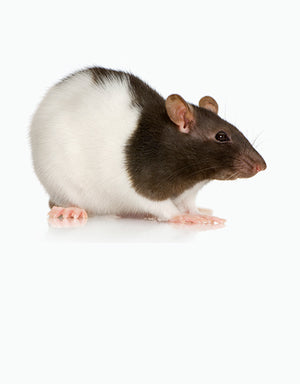
We advise against the feeding of rat pinkies and rat fuzzies to hatchling boas, as we find that the fat content in rats is difficult for juvenile boas to digest and they will often regurgitate it if they cannot process it. Rats are ideal prey when the boa is 6 months old and above, and they can remain on rats until the largest sized rats can no longer satiate their appetite. At that point, frozen thawed rabbits would be ideal prey for them about once per month.
There is strong debate over feeding live versus frozen thawed and there are pros and cons to both. Nutritionally, one is not better than the other assuming you have acquired your feed from a healthy source. Never leave a live rodent unsupervised with your snake and never leave an uneaten frozen or thawed rodent to decompose overnight. To read more about feeding live versus frozen and thawed, see Karen's Corner.
Water: Provide a water dish filled with fresh, clean water at all times. Ensure the water dish is large enough for your boa to soak in if desired.

Health & Maintenance
Hygiene: Your Colombian Boa will only relieve itself once every 7-10 days on average when they are young and every 14-21 days when they are older. Over time, you will learn your snake's bathroom routines. Look out for it regularly and remove all excrements as soon as you see it to prevent the buildup of bacteria and parasites. Remove excrements, shed skin, and uneaten prey items promptly. You may notice small chunks of a white chalky substance. This is called urates and should be removed promptly as well. We recommend a full substrate change once per season, 4 times a year. Wood and plant decor can be washed monthly with hot water and dish soap and put back into place.
Handling: Colombian Boas are generally calm and tolerate handling well, but some individuals may be defensive, especially as juveniles. When handling, always support the snake's body and avoid sudden movements. Handling sessions should be kept brief at first, gradually increasing as the snake becomes accustomed to human interaction. Avoid handling immediately after feeding or during shedding. Wash your hands before and after handling to prevent the spread of bacteria.
Behavioural observation: Colombian Boas are primarily nocturnal but may become active during the day, especially if they feel comfortable in their environment. They tend to be curious and exploratory, often using their strong muscles to climb and investigate their surroundings.
Signs of stress include hissing, striking, or defensive posturing, while signs of illness include lethargy, excessive soaking, fragmented shedding, laboured breathing, or gurgling while breathing. Observing behaviour regularly can help identify any health concerns early. A healthy Colombian Boa will always have strong muscle tissue and holds itself up well at all times during handling.
Quarantine: Quarantine any new additions to your reptile collection to prevent the spread of diseases.
Common Questions
How big do Colombian boas get?
6 to 10 feet. That is the main thing to think about before buying one. Adults need a minimum enclosure of 4x2x2 feet, and larger is better.
What should I feed a baby Colombian boa?
Hopper mice and adult mice. Avoid rat pinkies and rat fuzzies for hatchlings. The fat content in rats is hard for juvenile boas to digest and they will often regurgitate. Move to rats at around 6 months.
How often do Colombian boas eat?
Every 7 to 10 days as juveniles, every 7 to 14 days as sub-adults, and every 14 to 28 days as full size adults. Very large adults may eventually take a frozen thawed rabbit about once a month.
Do Colombian boas climb?
Yes. They are semi arboreal and will use vertical space if you provide it, despite their size. Foliage canopy and elevated branches are worth adding.
What humidity do Colombian boas need?
50 to 70%. They come from tropical Central and South America and need it consistently. A humidity hide with damp sphagnum moss helps if the enclosure as a whole is hard to keep humid.
How long do Colombian boas live?
25 to 35 years. Along with their adult size, this is the biggest commitment to weigh up before getting one.
All Reptiles, all the time.
Colombian boas in stock now
We carry Colombian boas, along with the substrate, enclosures, heating and hides covered in this guide, at 1911 Kennedy Rd. Unit 99 in Toronto. Staff can walk you through a full setup in person.


