




















DID YOU KNOW? - Your reptile has a third eye


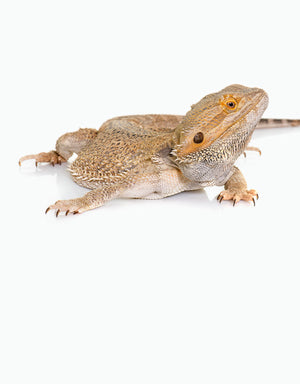
Look at the top of a bearded dragon's head, between and a little behind the two eyes you already know about. There's a small pale scale there, sometimes with a darker dot in the middle. That's the parietal eye, and most lizards, along with tuataras and a few other reptiles, carry one.
It works as an eye in a limited way. The parietal eye has a simple lens and a retina, and it connects straight to the brain through the pineal gland. It can't form an image or see color. It reads light: how bright, how long, and whether a shadow just passed over it.
That last part earns its keep. A shadow crossing the top of the head often means a bird overhead, so the organ gives a reptile a head start to bolt for cover. It also tracks day length and the daily light cycle, which helps set its feeding and breeding rhythms through the seasons.
The eye feeds into temperature control too. Researchers who covered the parietal eye in lizards watched their thermoregulation fall apart. Some basked too long and overheated. Others never warmed up enough. When it works, the organ helps a reptile judge how much sun it's taking on and when to move off the heat.
Next time your dragon freezes and flattens as your hand passes over the tank, that third eye caught the shadow before the other two did. It's one more sign of how closely these animals read light and heat, the two things their whole day turns on.


