
















Macklot's Python Care Sheet


Introduction
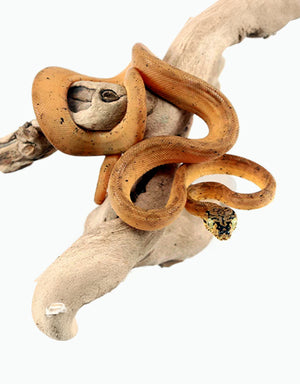
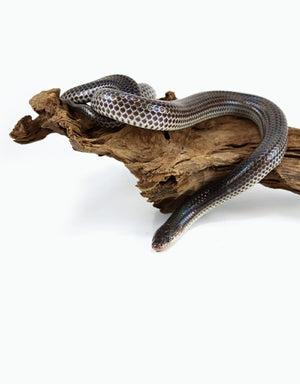
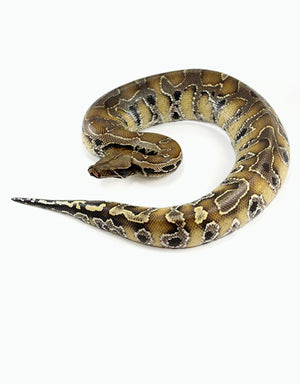
Macklot's Pythons (Liasis mackloti), also known as Freckled Pythons, are medium-sized snakes native to Indonesia, Timor, and parts of the Lesser Sunda Islands. They are known for their striking iridescent scales, feisty attitude, hardy nature, and manageable size, making them a great choice for intermediate keepers. This species is naturally defensive and may frequently strike at moving objects. While they can become more accustomed to handling over time, caution should always be exercised when interacting with them.
Care sheets are only to be taken as guidelines. Just as with all animals, each reptile will have unique traits and personalities special to the individual animal that may require adaptation in their husbandry and care. The following care sheet will address basic requirements but as the primary caretaker of your pet, we encourage you to take notice of your pet's behaviours and preferences and make adjustments as they grow with you and your family. Please also keep in mind that unlike mammals, most reptiles change their behaviour according to seasonal weather changes even if you keep them indoors all year round. Most reptiles also change their behaviour according to their life stages and should not be expected to behave the same their whole life.
We keep snakes in stock at our Toronto store and ship across Canada.

Cheat Sheet
Macklot's Python
| Common name | Macklot's Python |
|---|---|
| Scientific name | Liasis mackloti |
| Natural location | Papua New Guinea, Indonesia, East Timor, and surrounding islands |
| Habitat (wild) | Tropical warm, grasslands, open forest, close to water |
| Captive enclosure | 20gal for hatchlings/juveniles, 40gal+ for adults |
| Substrate | Cypress Mulch, Loose Bark, Soil mixtures, etc |
| Temperature tolerance | Nighttime: 70°F (21°C), Cooler: 75-80°F (24-27°C) |
| Basking temperature | 88-92°F (31-33°C) |
| UVB lighting | Optional. Can be beneficial in small amounts. |
| Humidity | Approx. 50%-70% |
| Average adult size | 6-8 feet |
| Captive lifespan | 15-25 years |
| Fun fact | Their scales are iridescent, reflecting with rainbow colours in the right light |
Housing
Enclosure: Juvenile Macklot's Pythons can thrive in a 20gal long enclosure, while adults require a minimum of 40gal and up, with larger enclosures preferred for females. This is a very active species and are both great climbers and burrowers, so providing lots of climbing enrichment and a thick moisture retaining substrate is highly recommended.
Substrate: We recommend an easy to clean and moisture retaining substrate such as mulch, coconut husk, or reptile bark bedding. To provide a more enhanced substrate, it is best to mix those options together with coco fibre, repti soil, or jungle mix for a richer substrate that retains moisture very well.
Heating: Maintain a thermal gradient within the enclosure, with a warm side temperature of 88-92°F (31-33°C) and a cool side temperature of 78-82°F (26-28°C). Night time temps can drop to 72-75°F (22-24°C). Heat pads, lamps, emitters, and radiant heat are all great options for this species. If you choose to use a heat lamp, it is advisable to also provide humid hides as heat lamps will tend to draw humidity often making the enclosure too dry for this species.
Hide spots: The best hides for Macklot's Pythons are snug, secure, and made from durable, easy-to-clean materials. These snakes value privacy and a sense of security, so hides should be appropriately sized to allow them to feel enclosed but still fit comfortably. Half logs, cork bark, and commercially available hides are all suitable options. Humidity is also important for this species so if you find that the enclosure is too dry, it is advisable to provide a humid cave on the cool side of your terrarium.
Humidity: Macklot's Pythons can tolerate variances in humidity very well but they do prefer moderate to higher humidity levels of 50-70%, and can develop respiratory health concerns if the climate is too dry for extended periods of time. Spray your terrarium regularly to keep humidity up and ensure proper ventilation to prevent excessive moisture. A humidity box filled with damp sphagnum moss can be added, especially during shedding, to help maintain proper hydration.
Diet
Feeding: Macklot's Pythons have a strong feeding response, they tend to be more food aggressive than other snake species so be careful during feeding time. Hatchlings can start on pinky or fuzzy mice, while adults can be fed rats or similarly sized prey. Juveniles should be fed every 7-10 days, while adults can be fed every 10-14 days. There is strong debate over feeding live versus frozen thawed and there are pros and cons to both. Nutritionally, one is not better than the other assuming you have acquired your feed from a healthy source. Never leave a live rodent unsupervised with your snake and never leave an uneaten frozen/thawed rodent to decompose overnight. To read more about feeding live versus frozen/thawed, please refer to Karen's Corner.
Water: Provide a water dish filled with fresh, clean water at all times. Ensure the water dish is large enough for your Macklot's Python to soak in if desired.

Health & Maintenance
Hygiene: Your Macklot's Python will relieve itself once every 7-10 days on average. Over time, you will learn your snake's bathroom routines. Look out for it regularly and remove all excrements as soon as you see it to prevent the buildup of bacteria and parasites. Remove excrements, shed skin, and uneaten prey items promptly. We recommend a full substrate change once per season, 4 times a year, for smaller setups. For larger setups, a full change 1-2 times per year is enough as long as you maintain spot cleaning daily or weekly. Wood and plant décor can be washed monthly with hot water and dish soap and put back into place.
Handling: Most Macklot's Pythons remain quite defensive for their entire lives. They are unapologetically defensive throughout the juvenile years and with careful regular handling can calm down to a degree. However calm a Macklot's Python may be, they remain quickly responsive to movements and can become defensive again towards any sudden movements. When handling, be prepared that you might get bit. Provide strong steady hands that support the strength of your snake so that it does not feel insecure. Avoid handling during the shedding process and after feeding to minimize stress. Wash your hands before and after handling to prevent the spread of bacteria.
Behavioural observation: These snakes are highly active and curious, often exploring their enclosure both during the daytime and night time. They are a slender bodied python which allows them to be excellent climbers and will showcase their climbing abilities to you if the habitat allows it. They will often exhibit defensive behaviours such as hissing and striking and if they happen to land a bite on your hand, they are known to wrap it and will take several minutes before they are willing to let go. We typically only recommend this species to experienced keepers!
Quarantine: Quarantine any new additions to your reptile collection to prevent the spread of diseases.
Common Questions
Are Macklot's pythons good for beginners?
No. They are a good choice for intermediate keepers, and the behavioural notes on this sheet go further and recommend them to experienced keepers only. They are naturally defensive, strike at movement, and most stay that way for life.
Do Macklot's pythons bite?
Expect it. They hiss and strike readily, and a bite to the hand often comes with a wrap that takes several minutes to release. Careful regular handling calms them to a degree, but a calm Macklot's still reacts fast to sudden movement.
How big do Macklot's pythons get?
6 to 8 feet, living 15 to 25 years. Slender bodied rather than heavy, which is what makes them such good climbers.
What size enclosure does a Macklot's python need?
A 20 gallon long for juveniles, a minimum of 40 gallons for adults, and more for females. They climb and burrow, so the setup needs climbing enrichment above and a thick moisture retaining substrate below.
How often do Macklot's pythons need to be fed?
Every 7 to 10 days as juveniles and every 10 to 14 days as adults. Hatchlings start on pinky or fuzzy mice and adults take rats or similarly sized prey. They have a strong feeding response and are more food aggressive than most snakes, so be deliberate at feeding time.
What humidity do Macklot's pythons need?
50 to 70%. They handle swings well but do not tolerate long dry spells, which can bring on respiratory problems. Spray regularly, keep ventilation good so it does not go damp, and add a moss-filled humidity box during sheds.
All Reptiles, all the time.
Snakes in stock now
We carry snakes, along with the substrate, enclosures, heating and hides covered in this guide, at 1911 Kennedy Rd. Unit 99 in Toronto. Staff can walk you through a full setup in person.


