














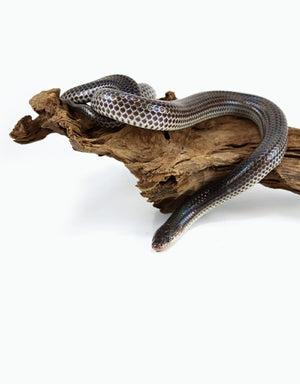


Gopher Snake Care Sheet


Introduction
Gopher Snakes (Pituophis catenifer) are medium sized, non venomous colubrid snakes known for their adaptability and charismatic personalities. They have striking patterns and are known for their ability to mimic rattlesnakes when threatened.
Care sheets are only to be taken as guidelines. Just as with all animals, each reptile will have unique traits and personalities special to the individual animal that may require adaptation in their husbandry and care. The following care sheet will address basic requirements but as the primary caretaker of your pet, we encourage you to take notice of your pet's behaviours and preferences and make adjustments as they grow with you and your family. Please also keep in mind that unlike mammals, most reptiles change their behaviour according to seasonal weather changes even if you keep them indoors all year round. Most reptiles also change their behaviour according to their life stages and should not be expected to behave the same their whole life.
We keep snakes in stock at our Toronto store and ship across Canada.

Cheat Sheet
Gopher Snake
| Common name | Gopher Snake |
|---|---|
| Scientific name | Pituophis catenifer |
| Natural location | Canada, United States, Mexico |
| Habitat (wild) | Widespread deserts, forests, grasslands, and agricultural areas |
| Captive enclosure | 15-20gal for hatchlings/juveniles, 40gal+ for adults |
| Substrate | Aspen, Cypress Mulch, Loose Bark, Rock/Clay/Sand mixture |
| Temperature tolerance | Nighttime: 68-75°F (20-24°C), Cooler: 72-78°F (22-26°C) |
| Basking temperature | 82-88°F (28-31°C) |
| UVB lighting | Optional. Beneficial in moderate amounts |
| Humidity | Approx. 30%-50% |
| Average adult size | 4-6 feet |
| Captive lifespan | 20-30 years |
| Fun fact | Commonly venture into suburban garages and sheds seeking refuge |
Housing
Enclosure: Adult Gopher Snakes require a spacious enclosure to accommodate their high activity levels. A minimum of a 40gal enclosure is recommended for a single adult, but larger is always better. Ensure the enclosure is escape proof, as these snakes are strong and curious.
Substrate: Choose a substrate that encourages burrowing and retains moisture without being overly damp, such as cypress mulch, coconut husk, or reptile bark bedding. You can also use aspen shavings if you are able to provide adequate air humidity. Advanced setups can use a rock, clay, and sand mixture. This species loves to burrow and dig so provide a nice deep substrate to allow this behaviour to transpire.
Heating: Maintain a thermal gradient within the enclosure, with a warm side temperature of 85-90°F (30-32°C) and a cool side temperature of 70-75°F (21-24°C). Night time temps can drop to 65-70°F (18-21°C). For smaller enclosures, we recommend using heat pads but this will likely not be sufficient for larger enclosures. Overhead heat such as heat lights, emitters, and radiant heat are all excellent choices to heat your Gopher Snake habitat. Overhead heat will continuously dry your terrarium so ensure you provide humid hides for hydration.
Hide spots: One hide spot is often enough but the more the merrier! If only offering one, ensure that it is situated on the warm side. If you have the space, at least two is ideal, one on the warm side and one on the cool side of the enclosure, to allow your Gopher Snake to thermo-regulate and feel secure. Half logs, cork bark, and commercially available hides are suitable options. You may also want to turn your cool side hide into a humid cave.
Humidity: Gopher Snakes prefer low to moderate humidity levels of 30-50%. They can tolerate low humidity very well but will eventually need to retreat to higher humidity cave or burrow structures. Ensure proper ventilation in the enclosure to prevent excessive moisture. A humidity box filled with damp sphagnum moss can be added, especially during shedding, to help maintain proper hydration.
Diet
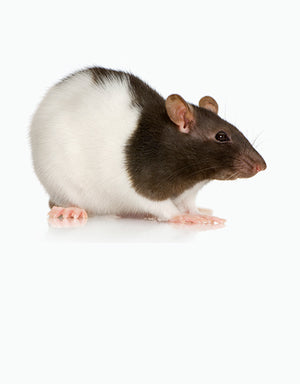
Feeding: Gopher Snakes are carnivores and primarily prey on rodents, small birds, frogs, lizards, and eggs. In captivity, a staple diet of mice and rats is sufficient and easy to obtain. Hatchlings should be fed fuzzy mice every 5-7 days, while sub adults and adults can be fed appropriately sized rats every 7-10 days. Prey items should be no wider than the thickest part of the snake's body. Gopher Snakes have a fast metabolism and over time you will notice that they become very restless when they are hungry. As they age, their feeding frequency typically decreases, with very mature Gopher Snakes (over 15 years old) often eating only once every 2-3 weeks, provided the meal is appropriately sized. There is strong debate over feeding live versus frozen thawed and there are pros and cons to both. Nutritionally, one is not better than the other assuming you have acquired your feed from a healthy source. Never leave a live rodent unsupervised with your snake and never leave an uneaten frozen/thawed rodent to decompose overnight. To read more about feeding live versus frozen/thawed, please refer to Karen's Corner.
Water: Provide a water dish filled with fresh, clean water at all times. Ensure the water dish is large enough for your Gopher Snake to soak in if desired.

Health & Maintenance
Hygiene: Your Gopher Snake will relieve itself once every 5-7 days on average. Over time, you will learn your snake's bathroom routines. Look out for it regularly and remove all excrements as soon as you see it to prevent the buildup of bacteria and parasites. Remove excrements, shed skin, and uneaten prey items promptly. We recommend a full substrate change once per season, 4 times a year, for smaller setups. For larger setups, a full change once per year is enough as long as you maintain spot cleaning daily or weekly. Wood and plant décor can be washed monthly with hot water and dish soap and put back into place.
Handling: Gopher Snakes are generally docile in captivity, though they may display defensive behaviours when threatened, such as hissing, puffing up, and tail rattling. These behaviours are typically bluffing and decrease with regular, gentle handling. Handle them confidently but carefully, avoiding sudden movements. Avoid handling during the shedding process and after feeding to minimize stress. Wash your hands before and after handling to prevent the spread of bacteria. Consistent handling will help build trust over time.
Behavioural observation: Gopher Snakes are inquisitive, active, and alert snakes. They are known for their large size, bright colouration, and defensive displays, which can resemble rattlesnakes. In captivity, they are active burrowers and climbers, often exploring their enclosure. Observing their behaviour, from digging to basking, can be highly rewarding for keepers. They provide keepers utmost delight observing them and can be highly rewarding and provides insight into their unique personalities. Monitor your Gopher Snake's behaviour for signs of illness or stress, such as decreased appetite, lethargy, or abnormal shedding. A healthy and well fed Gopher Snake will always have strong muscle tissue and holds itself up well at all times.
Quarantine: Quarantine any new additions to your reptile collection to prevent the spread of diseases.
Common Questions
Are gopher snakes venomous?
No. They are non venomous colubrids. The confusion comes from their defence display, which mimics a rattlesnake convincingly enough to fool most people, including hissing, puffing up and rattling the tail.
Are gopher snakes good pets?
Generally docile in captivity. The bluffing behaviour looks alarming but it is exactly that, and it fades with regular gentle handling. Handle confidently, avoid sudden movements, and consistency builds trust over time.
How big do gopher snakes get?
4 to 6 feet, living 20 to 30 years. Adults need a minimum of 40 gallons and the enclosure has to be escape proof, because they are strong and curious.
How often do gopher snakes need to be fed?
Hatchlings every 5 to 7 days on fuzzy mice, sub adults and adults every 7 to 10 days on appropriately sized rats. Prey should never be wider than the thickest part of the snake. They have a fast metabolism and get visibly restless when hungry. Snakes over 15 years old often drop to once every 2 to 3 weeks.
What humidity do gopher snakes need?
30 to 50%, lower than most snakes. They handle dry conditions well but still need somewhere humid to retreat to, so a humid hide or burrow matters even at this range. Add a moss-filled humidity box during sheds.
Do gopher snakes burrow?
Yes, and they climb too. Give them a deep substrate that holds a burrow. Cypress mulch, coconut husk or bark bedding all work, and advanced keepers use a rock, clay and sand mixture.
All Reptiles, all the time.
Snakes in stock now
We carry snakes, along with the substrate, enclosures, heating and hides covered in this guide, at 1911 Kennedy Rd. Unit 99 in Toronto. Staff can walk you through a full setup in person.


